What Mid-Size Manufacturers Need to Know About Energy Storage Right Now
The federal incentive picture for energy storage changed significantly when the One Big Beautiful Bill was signed into law on July 4, 2025. For manufacturers evaluating on-site storage, the headline is this: residential credits are gone, but commercial and industrial storage is in a stronger position than most people realize.
Here is what actually happened, and what it means if you are trying to make a decision.
What the One Big Beautiful Bill Actually Did to Energy Storage
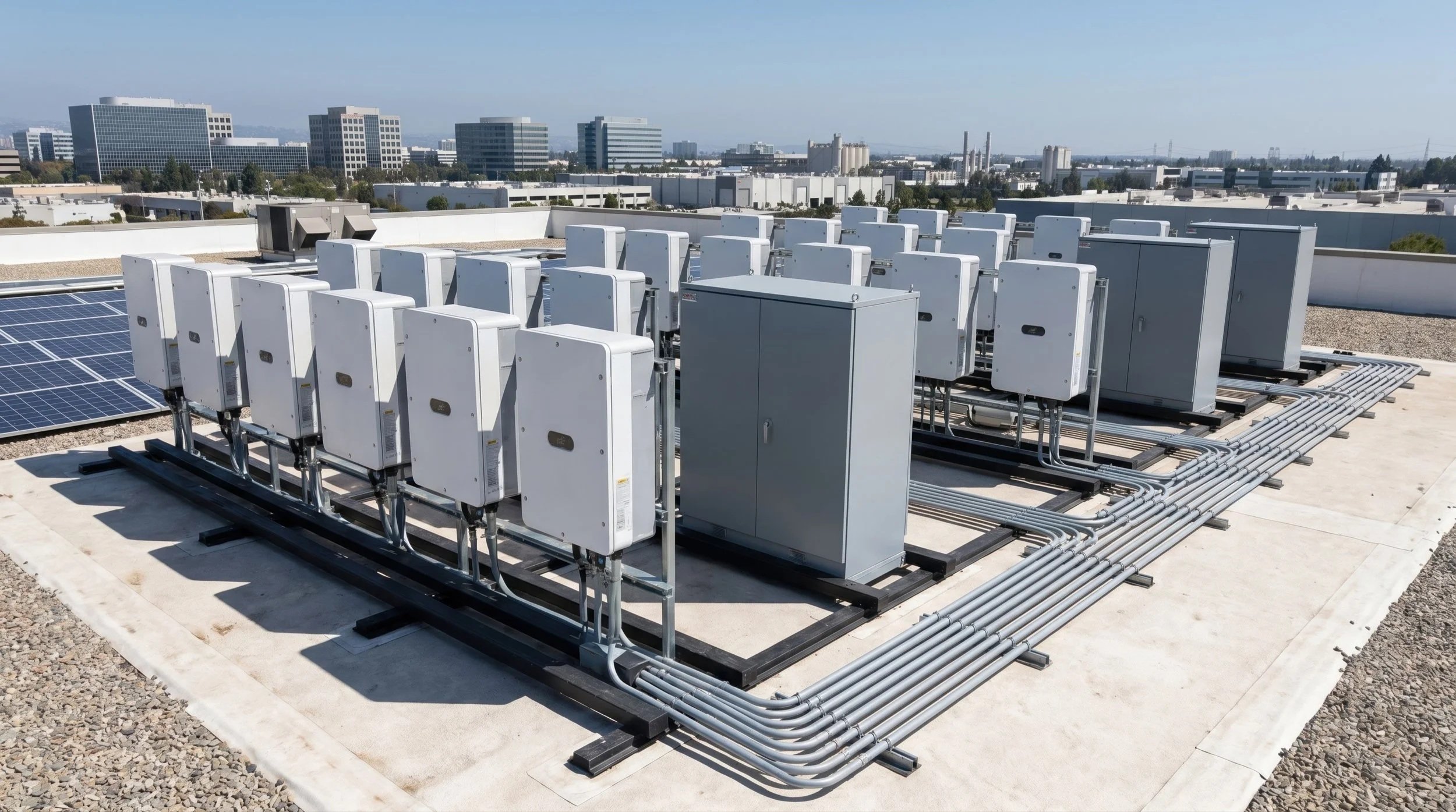
The bill eliminated the residential clean energy credit (Section 25D) for systems installed after December 31, 2025. Homeowners who did not get in under the wire lost their 30 percent tax credit. That is a real blow to the residential solar and storage market.
Commercial and industrial storage is a different story. The technology-neutral investment tax credit under Section 48E remains available for energy storage through 2033, with a ramp-down afterward. According to SEIA, the placed-in-service deadline for wind and solar does not apply to energy storage projects. (SEIA)
Wood Mackenzie put it plainly: storage is in a relatively strong position compared to wind and solar because its tax credits will last eight years longer. (Wood Mackenzie)
There is a catch, and it matters. Projects that begin construction after 2025 face new restrictions on material assistance from foreign entities of concern, primarily Chinese manufacturers. Companies evaluating storage systems need to understand their supply chain before assuming they qualify for the full credit. (Kirkland & Ellis)
The Market Is Moving Anyway
Policy uncertainty has not slowed the market. Global energy storage installations exceeded 100 gigawatts of annual additions for the first time in 2025, according to BloombergNEF. The US alone installed 9.7 gigawatt-hours of new capacity in the first quarter of 2026, the strongest first quarter on record. (BloombergNEF)
The battery energy storage market is projected to grow from $81.6 billion in 2026 to $195 billion by 2036. (Future Market Insights)
For mid-size manufacturers, the business case is increasingly straightforward. Commercial facilities are adopting storage to reduce demand charges. Facilities with critical operations are adding batteries for resilience. The return on investment math has changed as energy costs have risen and battery costs have fallen.
Why Industrial Buyers Are Still Hesitating
The market data and the tax credit picture tell one story. Adoption rates among mid-market manufacturers tell another. The gap is not a technology problem. It's a trust problem.
The barriers that show up in research are real: high upfront capital costs, permitting and interconnection delays, safety concerns, regulatory uncertainty. But underneath those is something harder to quantify. Industrial buyers are not confident they are getting the full story. The incentive landscape is complicated. The FEOC supply chain restrictions added another layer. If someone on a procurement or operations team spent three months evaluating storage two years ago, they are working from outdated assumptions and they probably know it.
That uncertainty stalls decisions even when the economics work. And it is the central challenge for every company trying to sell into this market right now.
What Industrial Buyers Need Before They Commit
Understanding what moves an industrial buyer forward is the starting point for any go-to-market strategy in this space.
Specificity over category claims. Industrial buyers respond to numbers tied to their facility, their load profile, their utility rates. What does demand charge reduction actually look like for an operation like theirs? What is a realistic payback period in their region? Vague claims about energy independence do not move capital budgets.
Proof from their sector. A case study from a comparable facility carries more weight than utility-scale project data. A food manufacturer wants to know what a similar food manufacturer experienced. A packaging plant wants peer data, not grid developer metrics.
Clarity on tax credit eligibility. The FEOC restrictions are real and the supply chain implications are not always obvious. Buyers want someone to walk them through exactly what they qualify for before they build any credit into an ROI model. Companies that can provide that clarity early in the sales process have a significant advantage.
A credible outside voice. Internal champions face skepticism from finance and operations leadership. The deals that close fastest typically have an outside expert, an industry publication, or an independent engineer helping validate the decision before it goes to the CFO.
Where State Policy Creates an Opening
The federal picture may be settled for now but state-level activity is not. Illinois passed a $300 per kilowatt-hour storage rebate that most Midwest manufacturers have not factored into their analysis. Washington State has proposed the Residential Battery Incentive Grant Program under SB 6008. Other states are moving fast on storage-specific incentives without the headline coverage federal policy gets.
For energy storage companies, this is a real go-to-market opportunity. Manufacturers in states with active incentive programs are closer to a yes than they realize. Being the company that shows up with that information first -- before a competitor does -- is a meaningful edge.
The Go-to-Market Implication
The manufacturers who move in the next 12 to 18 months will act while the commercial tax credit is robust and before adoption becomes standard rather than strategic. That is your window.
But reaching them requires more than a strong product. Industrial buyers need a communications approach that meets them where they are: uncertain, informed enough to ask hard questions, and looking for proof before they take anything to the CFO.
The energy storage companies gaining ground with this buyer right now are investing in specific, credible messaging built around buyer psychology, not product features. Case studies from comparable facilities. State-level incentive breakdowns. Third-party validation. Content that gives an internal champion something to work with.
If your go-to-market message is not moving industrial buyers past the hesitation point, that is a communications problem worth solving. That is what we do.
If the thinking here resonates,
let's talk.
Good content should lead somewhere.
If this one sparked an idea, let's find out if we're a fit.